Blue-Chip DeFi Portfolio Strategies
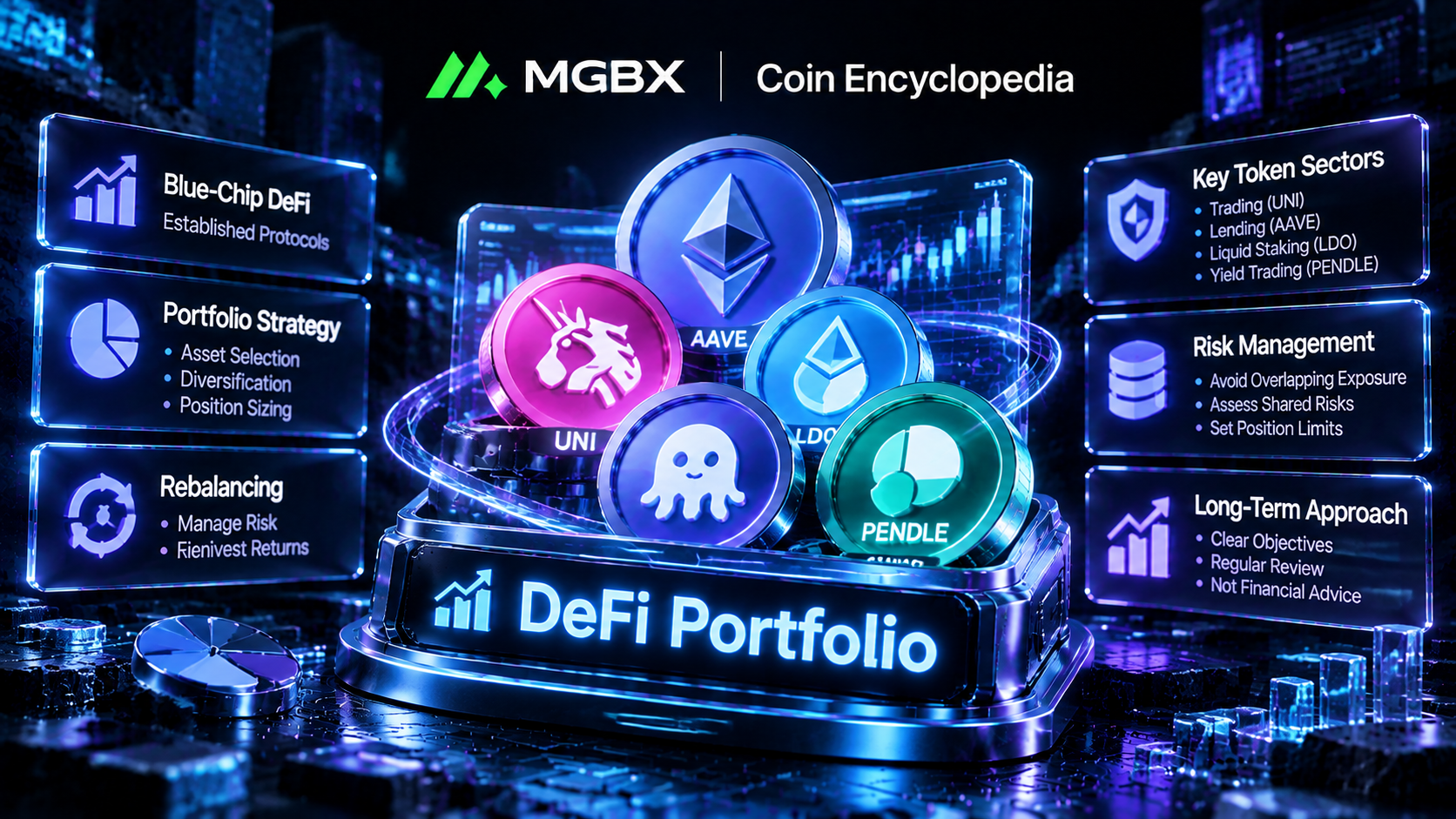
A blue-chip DeFi portfolio strategy starts with understanding asset rights and controlling risk concentration. “Blue-chip DeFi” has no universal certification standard; operating history, adoption, and liquidity are research indicators. Distinguish governance tokens, yield-bearing positions, and reserve funds, then check whether holdings share collateral, stablecoins, or underlying protocols before setting allocations and review rules. Diversification can reduce some project-specific risks but cannot prevent market-wide declines. Rebalancing and reinvesting returns do not guarantee profits or replace an exit plan.
What Is Blue-Chip DeFi, and How Should You Select Assets?
Blue-chip DeFi generally refers to established protocols with a meaningful operating history, adoption, and liquidity. It is not an official designation or a guarantee of principal protection. Evaluate demand, fee sources, governance powers, token supply, audits, and past incidents rather than ranking projects solely by total value locked (TVL).
Protocol quality and token rights also require separate assessment. Uniswap, Aave, Lido, and Pendle offer examples of trading, lending, liquid staking, and yield trading. Their governance tokens are not equivalent to yield-bearing positions in those services. Buying AAVE differs from supplying assets to Aave; protocol revenue does not automatically entitle every token holder to distributions.
Portfolio Strategy: From Sector Diversification to Risk Diversification
Start by defining your objectives: token price exposure, onchain yield, or financial flexibility. Allocate accordingly. Governance tokens carry market price risk; yield-bearing positions require examining underlying assets and exit conditions. Reserve funds also carry asset and custody risks—stablecoins should not simply be treated as cash.
Sector categories help organize research but do not prove diversification. For example, holding stETH, borrowing against stETH, and owning related PT positions may create overlapping exposure to ETH and staking risks. This is an assessment based on asset structure, not an assumption that differently named products are independent. Lido also distinguishes market swaps from protocol withdrawals.
Weights should reflect your timeframe, funding needs, and capacity for loss rather than a fixed allocation formula. Investor.gov’s asset allocation guide emphasizes investment horizon and risk tolerance. This principle can inform DeFi investing, but it does not constitute endorsement of any token portfolio.
How Should You Rebalance and Reinvest Returns?
Rebalancing manages deviations from target weights. If an asset’s target allocation is 20% but price gains increase it to 30%, you can review whether to reduce concentration. These figures illustrate the calculation, not a recommended allocation. Reviews can follow a schedule or predefined deviation thresholds. Account for fees, slippage, and applicable taxes so frequent trading does not erode returns.
Before adjusting, reassess your reasons for holding. Security incidents, governance changes, or deteriorating liquidity may invalidate the original rationale; adding to positions mechanically can be risky. Reinvestment also requires weighing incremental returns against risks: reward tokens may depreciate, while repeated reinvestment can increase dependence on one protocol. Exit rules should cover market sales, withdrawal queues, and position maturities. Borrowing positions also require separate health-factor management.
Following “A Beginner’s Guide to Investing in DeFi Tokens”, document holding rationales, position limits, and exit conditions. This article is educational and does not constitute investment advice.
FAQ
Can blue-chip DeFi guarantee the safety of funds?
No. Scale, operating history, and audits provide useful context but cannot rule out market declines or protocol incidents.Can diversification eliminate systemic risk?
No. It mainly reduces some project-specific risks; multiple tokens can still fall together during a market downturn.Are standalone PT holdings or lending positions safe because they avoid impermanent loss?
No. Avoiding typical AMM impermanent loss does not eliminate asset, smart contract, liquidity, or liquidation risks. Assess each separately.
Mastering the basics is the first step. Follow MGBX Academy to access more cryptocurrency educational resources and market opportunities.
The process for trading on MGBX:
Register a trading account and complete the necessary identity verification;
Deposit funds and select a trade type;
On the cryptocurrency trading page, enter the amount or quantity of the cryptocurrency you wish to purchase;
Confirm the order to complete the trade, and check that your assets have increased accordingly.