Lido (LDO): A Liquid Staking Leader
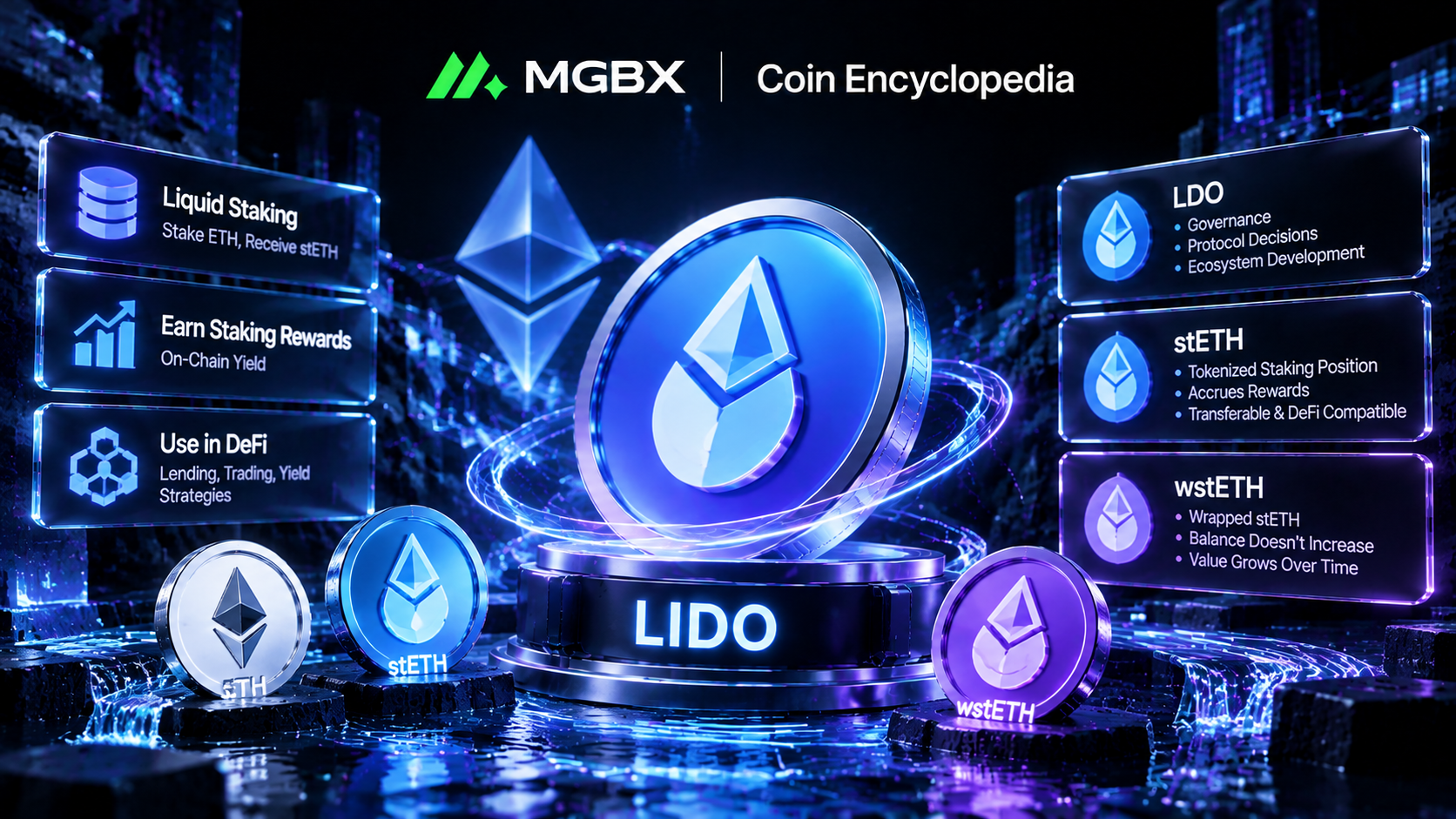
Lido uses tokenized receipts to make ETH staking positions transferable and usable in compatible DeFi applications. LDO serves governance purposes, while stETH and wstETH represent different forms of staking positions. Liquid staking lowers some participation barriers but does not eliminate price, smart contract, validator, or withdrawal risks. Researching Lido means understanding how rewards accrue, fees are deducted, and positions are exited. In particular, stETH should not be treated as ETH that can always be exchanged instantly at a fixed rate, nor should staking rewards be confused with returns from holding LDO.
What Is Lido, and How Does LSD Improve Staking?
Running an independent Ethereum validator typically requires at least 32 ETH and ongoing node maintenance. Pooled services lower individual capital and operational requirements. Lido’s core liquid staking offering lets users deposit ETH and receive stETH, a token representing their staking position that can be transferred or used in compatible applications.
This sector is commonly called LSD, short for liquid staking derivatives, or LST, referring to liquid staking tokens. These tokens improve the usability of staking positions rather than creating additional principal. Using them for lending or market-making may add income sources, but it also introduces additional protocol, price, and liquidation risks.
How Do LDO, stETH, and wstETH Differ?
LDO is Lido DAO’s governance token. Holders participate in decisions on protocol upgrades, parameters, and resource allocation under established rules. Official governance documentation also explains how stETH holders can constrain the execution of relevant governance decisions through Dual Governance. LDO holders therefore do not have unrestricted authority over every decision.
stETH and wstETH represent different forms of the same underlying staking exposure. stETH reflects rewards and other changes through balance adjustments. wstETH is a wrapped version: its balance generally does not increase as rewards accrue; instead, the amount of stETH represented by each unit changes. Both retain exposure to ETH’s price, so positive staking rewards do not necessarily mean positive returns in fiat terms.
How Should You Assess Fees, Withdrawals, and Risks?
At the time of review, Lido’s official fee documentation lists a 10% fee on staking rewards for its core staking mechanism—not a 10% deduction from principal. The split between node operators and the DAO varies by module configuration; it is not universally equal. Governance can also adjust the fee rate.
Exiting requires distinguishing market swaps from protocol withdrawals. Selling stETH on secondary markets involves prices determined by supply, demand, market depth, and slippage. Protocol withdrawals enter a queue, with waiting times affected by available ETH, validator exits, and other factors. Official guidance states that stETH is not a stablecoin with a fixed peg to ETH. Slashing exposure can also continue while withdrawals are queued, so instant 1:1 redemption cannot be guaranteed.
Multiple node operators and security audits help mitigate some risks but cannot eliminate contract vulnerabilities, validator errors, or governance risks. Following “A Beginner’s Guide to Investing in DeFi Tokens”, assess protocol usage, staking positions, and LDO token value separately. This article does not constitute investment advice.
FAQ
Does buying LDO earn ETH staking rewards?
Not automatically. LDO is a governance token; ETH staking rewards accrue to positions created through staking.Does an unchanged wstETH balance mean no rewards were earned?
Not necessarily. Rewards generally appear as changes in the amount of stETH represented by each wstETH. Fees and potential penalties also matter.If stETH trades at a discount, can I immediately exit at 1:1?
There is no guarantee. Market swaps execute at available prices, while protocol withdrawals depend on the queue, available funds, and associated risks.
Mastering the basics is the first step. Follow MGBX Academy to access more cryptocurrency educational resources and market opportunities.
The process for trading on MGBX:
Register a trading account and complete the necessary identity verification;
Deposit funds and select a trade type;
On the cryptocurrency trading page, enter the amount or quantity of the cryptocurrency you wish to purchase;
Confirm the order to complete the trade, and check that your assets have increased accordingly.