Cold Wallets vs. Hot Wallets vs. Paper Wallets: Comparing Security
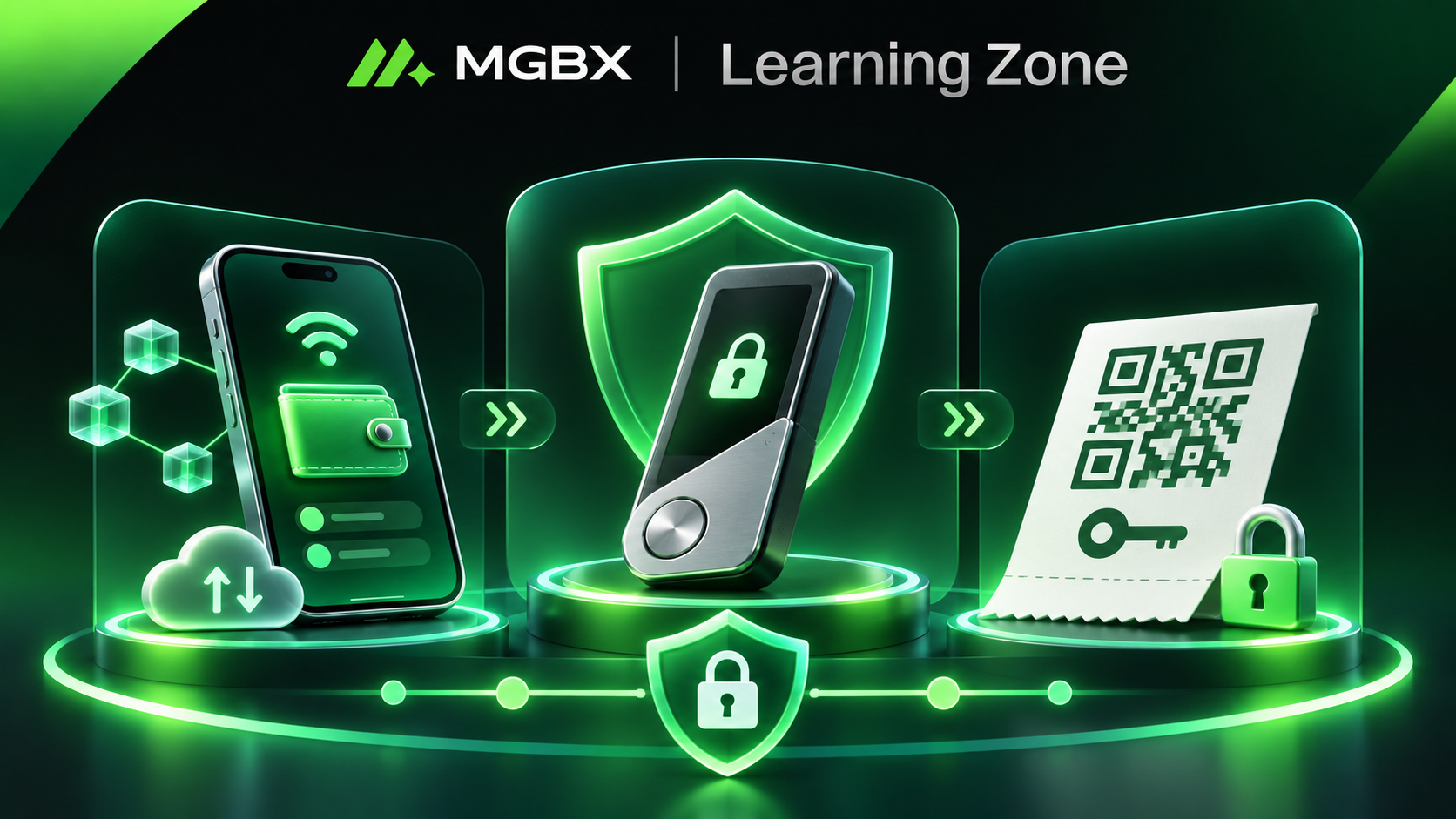
Wallet security depends on key generation, signing, backups, and recovery. Hot wallets support frequent use, cold wallets reduce exposure to connected environments, and paper wallets store secrets physically. Cold storage extends beyond hardware devices, while paper wallets are not a separate category equivalent to the hot–cold distinction. Consider cyberattacks, physical damage, and human error. Separate funds by purpose and verify that you can recover access rather than judging security by a product label.
Hot Wallets vs. Cold Wallets vs. Paper Wallets
Hot wallets typically manage keys on connected phones or computers, making transfers and app access convenient. Security depends on the operating system, extensions, and user habits. They need not remain online constantly and are not inherently unsafe, but require careful protection against malware and phishing.
Cold wallets keep keys offline using hardware wallets or other controlled offline signing environments. A connected system prepares and broadcasts transactions; the offline system signs them. Hardware wallets are common tools, but are not immune to every attack.
Traditional paper wallets record private keys and associated addresses on paper. A modern wallet’s handwritten seed phrase is a recovery backup. Paper backups do not change the signing environment, and metal backups are storage media—not devices that generate signatures.
Which Risks Should You Compare?
Assess the complete process rather than assuming cold wallets rank above paper wallets, which rank above hot wallets. These are common characteristics, not standardized security ratings.
Option | Main Advantage | Key Risks | Typical Use |
Hot wallet | Convenient everyday access | Malware, phishing, key exposure | Frequent, small transactions |
Cold wallet | Reduced direct key exposure to connected systems | Lost backups, mistaken approvals, device and firmware risks | Long-term storage |
Paper wallet | Physical storage of secrets | Unsafe generation, copying, damage, spending errors | Specific needs of experienced users |
Physical storage still needs protection against theft, water, and fire. Printing a key generated by an untrusted website cannot undo prior exposure. Paper wallets can use suitable offline signing workflows; importing into a connected device is not mandatory. Doing so, however, increases key exposure.
How Do You Choose a Sustainable Setup?
Use a separate wallet with a limited balance for everyday interactions. For long-term storage, consider a properly configured hardware wallet and verified backups. Independent credentials for different purposes help contain a single compromise. Every setup still requires reviewing transactions and approval limits.
Paper wallets also require understanding generation environments, printer data remnants, and spending mechanics. With Bitcoin change, for example, the original paper may not contain every key needed to control funds after spending. Beginners may find official backup, verification, and recovery procedures easier to follow reliably than a custom offline setup.
FAQ
Does airplane mode turn an old phone into a cold wallet?
Not by itself. System integrity, previous key exposure, and signing procedures also matter.Can cold wallets prevent malicious approvals?
Not reliably. Dangerous permissions you approve can still be exploited.Do assets disappear if the device breaks?
No. They remain on-chain, but restoring access requires the correct backup and necessary parameters.Are metal backups always safer than paper?
They may be more durable, but cannot replace confidentiality or accurate recording.
Further Readings:
Wallet Approval Management: How to Check and Revoke Token Approvals
What to Do If Your Crypto Is Stolen: Emergency Response Steps
Wallet Migration Guide: How to Switch Wallets Safely
On-Chain Security: The Difference Between Signatures and Transactions
Mastering the basics is the first step. Follow MGBX Academy to access more cryptocurrency educational resources and market opportunities.
The process for trading on MGBX:
Register a trading account and complete the necessary identity verification;
Deposit funds and select a trade type;
On the cryptocurrency trading page, enter the amount or quantity of the cryptocurrency you wish to purchase;
Confirm the order to complete the trade, and check that your assets have increased accordingly.