Advanced Futures Strategies: Hedging, Risk Management, and Calendar Spread Trading
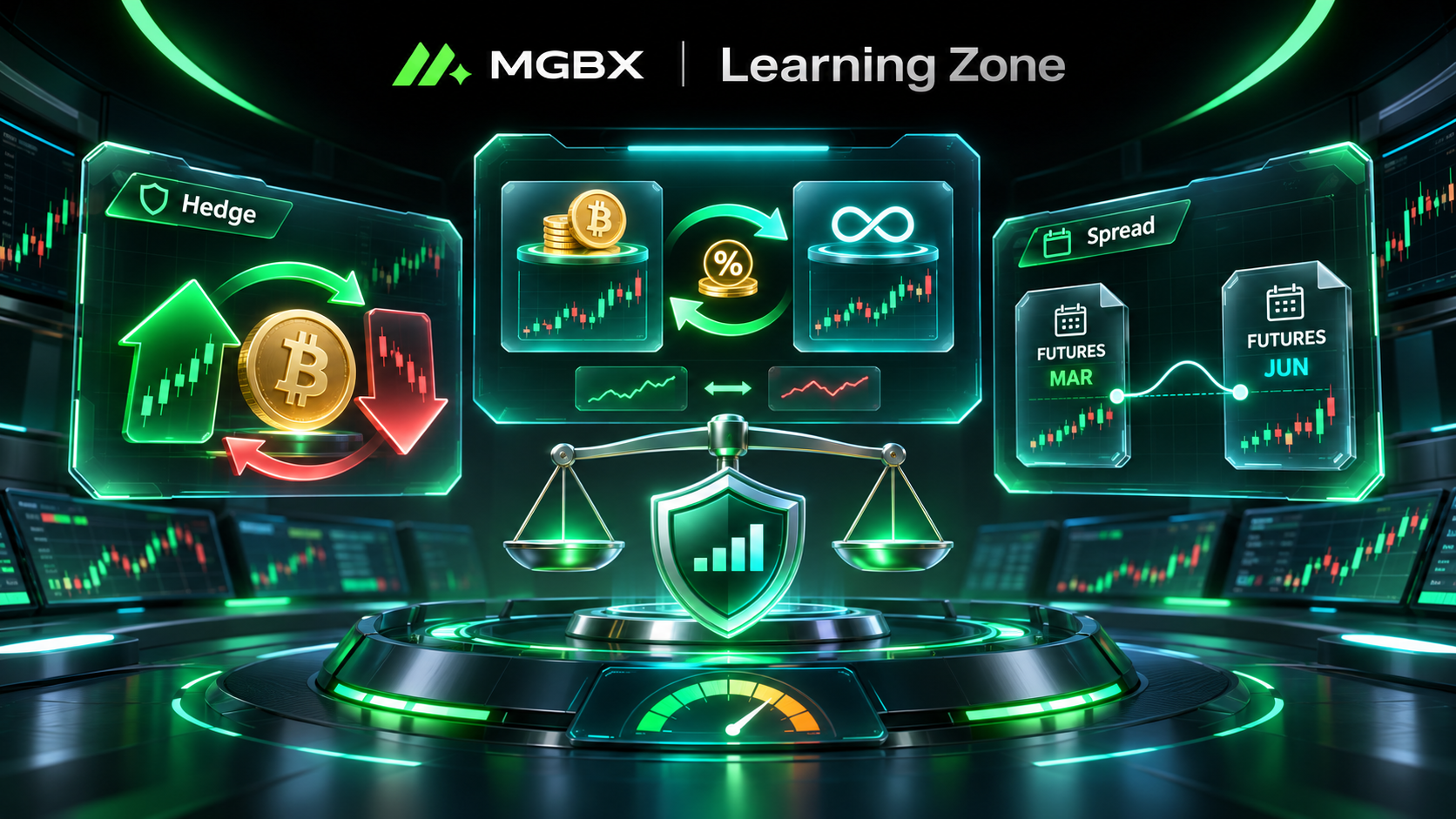
Advanced futures strategies involve more than simply predicting whether the market will rise or fall. They also use different position combinations to manage price exposure. Hedging reduces exposure to existing asset price movements by opening opposite or correlated positions. Hedging for risk management focuses on protecting existing holdings or future transactions, while calendar spread trading targets price differences between futures contracts with different expiry dates. Understanding how these strategies work and their associated risks helps traders develop a more comprehensive derivatives trading framework.
Hedging Strategies: Managing Spot Price Risk
Hedging involves using additional trades to reduce the impact of price movements on the overall value of an asset portfolio. For example, a trader holding 1 BTC in the spot market who expects a possible short-term decline may consider opening a BTC short position in the perpetual futures market. If BTC prices fall, the spot holding may incur a loss, while the short futures position may generate a profit, potentially offsetting part of the price impact.
This is an example of spot-futures hedging and is one application of hedging for risk management.
Hedging for risk management focuses on managing exposure from existing assets or future transactions. Long-term BTC holders may use futures positions to manage short-term downside risk, while miners may use futures short positions to manage price uncertainty when planning to sell their digital assets in the future.
It is important to note that a hedge ratio does not necessarily have to be 1:1. The appropriate ratio depends on asset exposure, contract specifications, price correlation, and risk management objectives. If spot and futures prices do not move in sync, basis risk may also arise.
The U.S. Commodity Futures Trading Commission (CFTC) also explains that producers and consumers can use futures contracts to manage risks arising from changes in commodity prices.
Spot-Futures Arbitrage and Funding Rate Strategies
Cash-and-carry arbitrage is a strategy that involves opening opposite positions in the spot and futures markets to potentially benefit from price differences between the two markets.
In perpetual futures markets, funding rates are an important factor in this strategy. When funding rates remain positive, long positions typically pay funding fees to short positions. Some traders may therefore buy an asset in the spot market while opening a short perpetual futures position with a similar notional value. This approach aims to reduce overall directional price exposure while potentially earning funding payments.
However, this is not a risk-free arbitrage strategy:
Funding rates change dynamically. Positive rates may decline or even turn negative.
The basis between spot and perpetual futures prices may widen, preventing the gains and losses of the two positions from fully offsetting each other.
Trading fees, slippage, margin requirements, and liquidation risk can also affect actual returns.
Therefore, spot-futures arbitrage is better understood as a strategy that seeks to reduce directional price exposure and capitalize on market pricing differences, rather than a method of guaranteeing fixed returns.
Calendar Spread Trading: Using Price Differences Between Futures Expiries
Calendar spread trading involves simultaneously buying and selling futures contracts on the same underlying asset with different expiry dates, aiming to benefit from changes in the price spread between them.
For example, a trader may buy a near-month BTC delivery futures contract while selling a longer-dated BTC delivery futures contract. The focus is no longer solely on whether BTC prices rise or fall, but on how the price difference between the two expiry months changes.
These price differences may be influenced by market supply and demand, holding costs, funding requirements, time to expiry, and market expectations. When the spread between near-month and longer-dated contracts widens or narrows, the PnL of the two positions also changes.
CME Group refers to this strategy of simultaneously buying one futures expiry and selling another as a calendar spread. Traders primarily focus on the relative price movements between different contracts.
It is important to note that calendar spread trading requires a platform to offer futures contracts on the same underlying asset with different expiry dates. If a platform only offers perpetual futures, traditional calendar spread strategies involving different delivery months cannot be applied directly. The availability of specific products on MGBX should always be confirmed on the actual trading page.
FAQ
Does hedging guarantee that traders will avoid losses?
No. Hedging can reduce some directional price risks, but basis risk, trading fees, funding rates, and execution differences may still result in losses.What is the difference between hedging and regular futures trading?
Regular futures trading generally aims to profit from price movements, while hedging primarily focuses on reducing price risk associated with existing assets or future transactions.What is calendar spread arbitrage?
Calendar spread arbitrage involves simultaneously buying and selling futures contracts on the same underlying asset with different expiry dates to potentially profit from changes in their price spread.Can perpetual futures be used for calendar spread trading?
Perpetual futures have no fixed expiry date, so they are generally not part of traditional calendar spreads between delivery months. However, they can be combined with spot or delivery futures in other spread-based strategies.What costs should traders consider when using hedging strategies?
Key costs include trading fees, funding payments, slippage, margin requirements, and changes in the spot-futures basis.
Further Readings:
Insurance Fund and Auto-Deleveraging (ADL) Mechanism
Futures Trading Risk Management Framework
Futures Trading Psychology: How to Avoid Emotional Trading
Mastering the basics is the first step. Follow MGBX Academy to access more cryptocurrency educational resources and market opportunities.
The process for trading on MGBX:
Register a trading account and complete the necessary identity verification;
Deposit funds and select a trade type;
On the cryptocurrency trading page, enter the amount or quantity of the cryptocurrency you wish to purchase;
Confirm the order to complete the trade, and check that your assets have increased accordingly.