Futures Trading Risk Management Framework
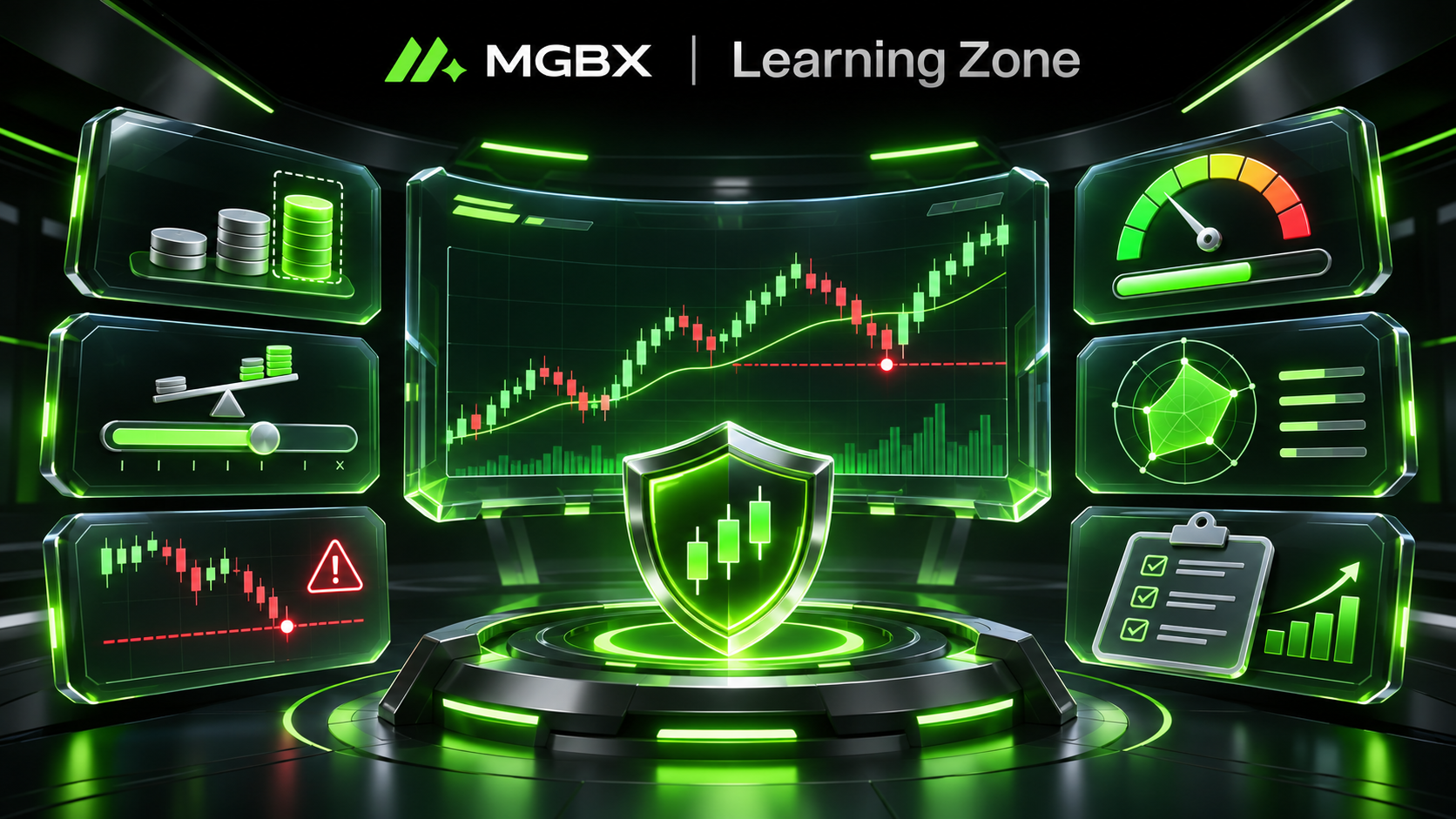
A futures trading risk management framework is a structured process that covers every stage of trading, from preparation and execution to post-trade review. Its key components include risk budgeting, position sizing, leverage management, take-profit and stop-loss orders, and margin monitoring. Effective risk management involves more than simply setting stop-loss orders. Traders also need to define the maximum acceptable loss per trade, manage overall account exposure, and prepare for abnormal market conditions. Clear and consistent trading rules help manage risk systematically rather than relying on decisions made under pressure.
Pre-Trade Risk Management: Position Sizing and Leverage Selection
Risk management should begin before opening a position, not only after losses appear in an account.
Set a risk budget: A risk budget is the maximum acceptable loss a trader is willing to take on a single trade. It can be determined based on account equity, individual risk tolerance, and trading strategy. There is no universal percentage that works for every trader.
A common simplified position-sizing approach is:
Risk Budget per Trade = Account Equity × Risk Percentage per Trade
Position Notional Value ≈ Risk Budget per Trade ÷ Stop-Loss Distance (%)
For example, if an account holds 10,000 USDT, the trader sets a risk budget of 100 USDT per trade, and the stop-loss distance is 2%, the theoretical position notional value would be approximately 5,000 USDT. Actual trading calculations should also account for contract multipliers, trading fees, and slippage.
Understand the relationship between leverage and position size. Leverage determines the margin required to open a position, but it does not independently measure actual trading risk. At the same leverage ratio, a larger position generally exposes the account to greater potential losses from price movements.
CME Group also emphasizes that traders should determine their stop-loss levels and acceptable account risk before calculating position size.
Risk Management During Trading: Stop-Loss Discipline and Margin Monitoring
Once a position is open, risk management focuses on continuously monitoring price movements, margin status, and position exposure.
Stop-loss discipline is an essential part of this process. Before opening a position, traders should identify the conditions under which their original trading thesis becomes invalid and set an appropriate stop-loss level. A stop-loss cannot guarantee execution at a specified price, but it helps define exit conditions in advance.
Margin ratio and maintenance margin management are equally important. Maintenance margin determines the minimum margin required to keep a position open. If an account or position fails to meet the platform's maintenance margin requirements, forced liquidation may be triggered.
According to the MGBX Help Center, maintenance margin is determined by position value and the applicable maintenance margin rate. Traders should continuously monitor mark price, real-time liquidation price, and margin status rather than focusing only on unrealized PnL.
It is also important to consider correlations between positions. Holding long positions in highly correlated assets such as BTC and ETH may create similar market-direction exposure, even when the positions involve different trading pairs.
Traders should also understand that stop-loss orders do not guarantee execution at the specified price during extreme market conditions. MGBX's official Take-Profit and Stop-Loss Explanation clarifies that trigger prices may differ from actual execution prices. The platform's Price Protection Mechanism also explains that certain take-profit and stop-loss orders may not trigger or may be only partially filled under extreme market conditions.
Official reference: MGBX Take-Profit and Stop-Loss Explanation.
Post-Trade Risk Management: Account Risk and Trade Reviews
A complete risk management framework also requires a consistent post-trade review process.
Track trading activity: After each trade, record the entry rationale, position size, leverage, stop-loss level, trading costs, final PnL, and execution details. Reviewing these records over time can help identify recurring problems, such as closing positions too early, adding to losing positions, or frequently changing stop-loss levels.
Set account-level limits: Establish daily or weekly maximum loss limits based on individual risk tolerance. Once a predefined risk limit is reached, pause trading and review the strategy to avoid increasing position exposure under the influence of emotions after consecutive losses.
Monitor other risks: Pay attention to major market events, liquidity changes, system failures, and abnormal price movements, as these can create risks beyond ordinary market-direction exposure.
The purpose of a risk management framework is not to guarantee profits on every trade. It is to identify risks in advance, limit potential losses, and continuously improve trading decisions through post-trade reviews.
FAQ
What does a futures trading risk management framework include?
It generally includes risk budgeting, position sizing, leverage management, stop-loss discipline, margin monitoring, and post-trade reviews.What is the difference between a risk ratio and a leverage ratio?
Leverage describes the relationship between position notional value and margin, while a risk ratio measures an account's or position's status relative to platform risk requirements. The exact calculation depends on the platform.Why can significant losses still occur even when a stop-loss is set?
Extreme volatility, price gaps, and insufficient liquidity can affect order execution. Stop-loss orders should therefore be combined with proper position sizing and margin management.Should risks be managed separately for multiple futures positions?
Yes. In addition to assessing individual trade risk, traders should consider correlations between assets and the overall risk exposure of their accounts.Why are post-trade reviews part of risk management?
Reviewing past trades helps identify recurring mistakes and improve position sizing, execution discipline, and risk budgeting.
Further Readings:
Insurance Fund and Auto-Deleveraging (ADL) Mechanism
Advanced Futures Strategies: Hedging, Risk Management, and Calendar Spread Trading
Futures Trading Psychology: How to Avoid Emotional Trading
Mastering the basics is the first step. Follow MGBX Academy to access more cryptocurrency educational resources and market opportunities.
The process for trading on MGBX:
Register a trading account and complete the necessary identity verification;
Deposit funds and select a trade type;
On the cryptocurrency trading page, enter the amount or quantity of the cryptocurrency you wish to purchase;
Confirm the order to complete the trade, and check that your assets have increased accordingly.