Getting the Direction Right Isn’t Enough: How Funding Rates Affect Futures Profits
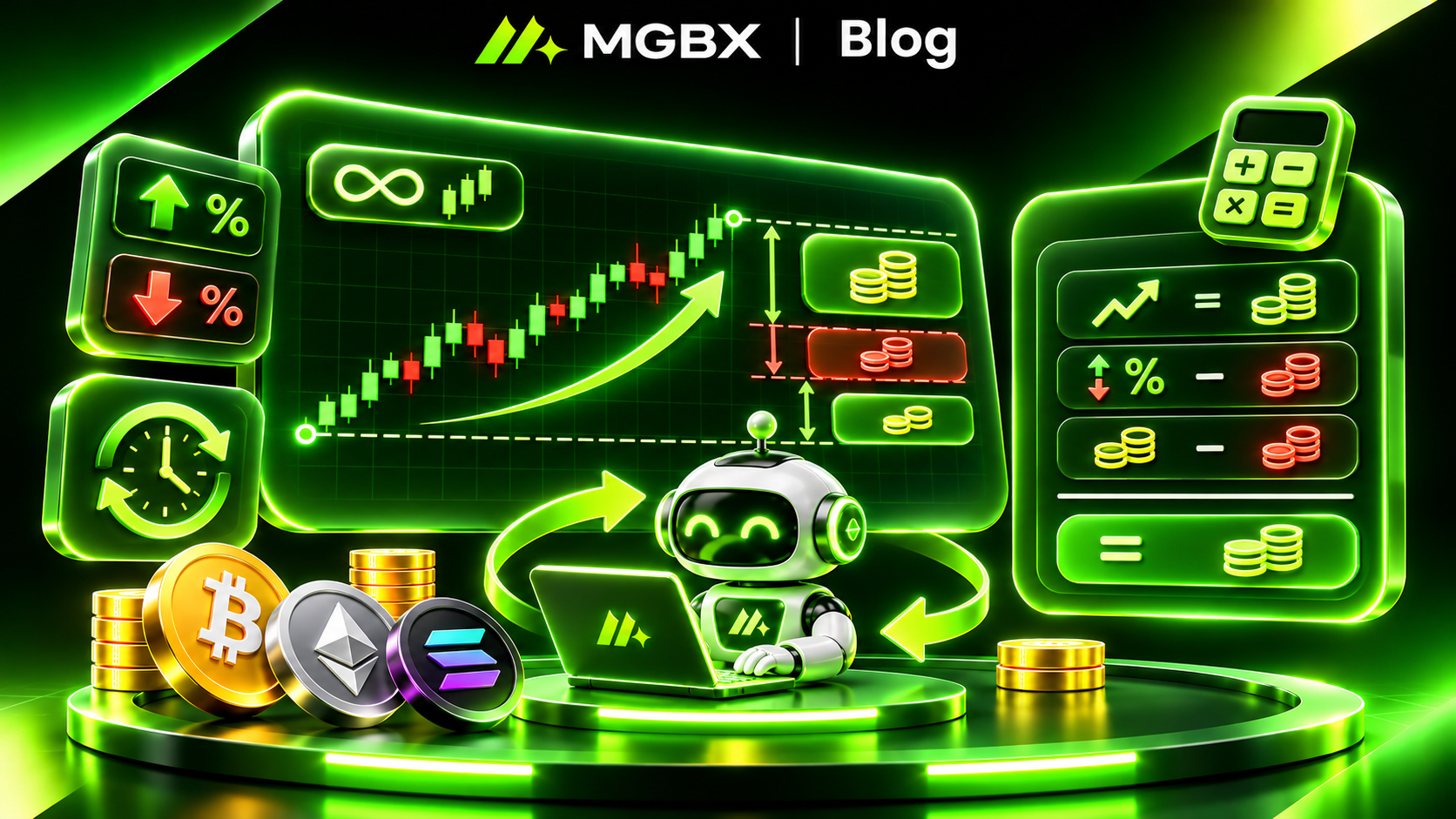
Getting the direction right does not necessarily make a trade worthwhile. Net perpetual futures returns equal profits from actual execution prices, minus trading fees, plus or minus funding payments. Longer holding periods require tracking cumulative costs rather than a single low rate. Compare assets using equal notional positions and settlement periods. Higher leverage increases the cost burden relative to margin. Our view: budget holding costs before choosing position size and exit conditions.
Key Takeaways:
Funding depends on position value at settlement, not just the margin deposited.
Identical rates can produce different costs when settlement frequencies differ.
Estimated rates can change; use actual settlement records for reconciliation.
Calculate price profits, trading fees, and funding separately to avoid double counting.
Why Can Funding Change a Trade’s Outcome?
A rising price does not always translate into higher net returns. Perpetual futures generally use payments between longs and shorts to help align contract prices with a reference price. Positive funding usually means longs pay shorts; negative funding reverses that direction. Funding is distinct from borrowing interest, and any additional platform charges require separate checks.
The MGBX funding guide describes stablecoin-margined funding as position value at settlement × applicable funding rate. A 10,000 USDT long pays 1 USDT at 0.01%. With three daily settlements over seven days, unchanged rates and position value produce 21 USDT in payments. Actual values fluctuate.
If price profits are 100 USDT, round-trip fees are 10, and funding costs total 21, net profit is 69. With only 20 in price profits, the trade loses money after costs. Funding changes whether a correct call pays off.
Standardize Time and Position Size Before Comparing Rates
A 0.01% rate is not automatically cheap. At unchanged rates, settlement every eight hours totals 0.03% daily; hourly settlement totals 0.24%, eight times more. MGBX may adjust individual contracts’ settlement frequency, so check the rate, interval, and next settlement time.
Assume 10,000 USDT in margin supports a 100,000 USDT position. Funding of 0.03%, settled three times daily for ten days at unchanged position value, costs 900 USDT, or 9% of margin. Doubling the position doubles the cost. Reducing margin alone leaves the funding amount unchanged but reduces the buffer.
Switching products introduces other costs: basis and rolling costs for dated futures, borrowing interest for margin spot, or greater capital requirements for unleveraged spot. Closing and reopening to save 5 USDT in funding is counterproductive if execution costs 12.
Bitcoin, Ether, and Solana: Which Costs Less to Hold?
Assume three longs each open at a notional value of 10,000 USDT, remain open seven days, and gain 2% based on actual execution prices. Round-trip fees are 10.1 USDT. Funding amounts below are hypothetical cumulative settlements, not current rates. All figures are in USDT.
Comparison | Bitcoin BTC Position | Ether ETH Position | Solana SOL Position |
Price profit | 200 | 200 | 200 |
Round-trip fees | 10.1 | 10.1 | 10.1 |
Net funding | −21 | −42 | 14 |
Net profit | 168.9 | 147.9 | 203.9 |
SOL receives funding here, but this does not establish a lasting cost ranking. Funding varies by contract, platform, demand, and calculation rules. Compare actual settlements over matching periods, not one asset’s forecast with another’s historical average.
High positive funding does not guarantee an imminent top, nor does negative funding guarantee a rebound. Watch price progress, open interest, and available bids together. Rising funding alongside weakening gains warrants reassessing the cost of waiting.
Build Holding Costs Into the Trading Plan
Model funding remaining unchanged, doubling, or becoming income. A target profit of 300, trading fees of 10, and funding costs of 30 imply net profit of 260. Funding of 90 reduces it to 200. Receiving funding still involves price, hedging, and exit risks.
During the trade, compare actual funding with the budget. Funding as a share of gross profit can help, but becomes misleading when gross profit approaches zero. Focus on absolute costs over your intended holding period and their effect on margin.
MGBX users can check the trading fee guide and current contract specifications, then reconcile against account records. A directional edge becomes a trading edge only when it covers execution and holding costs.