Where Does Token Value Come From? Demand, Revenue Flows, and Unlock Pressure
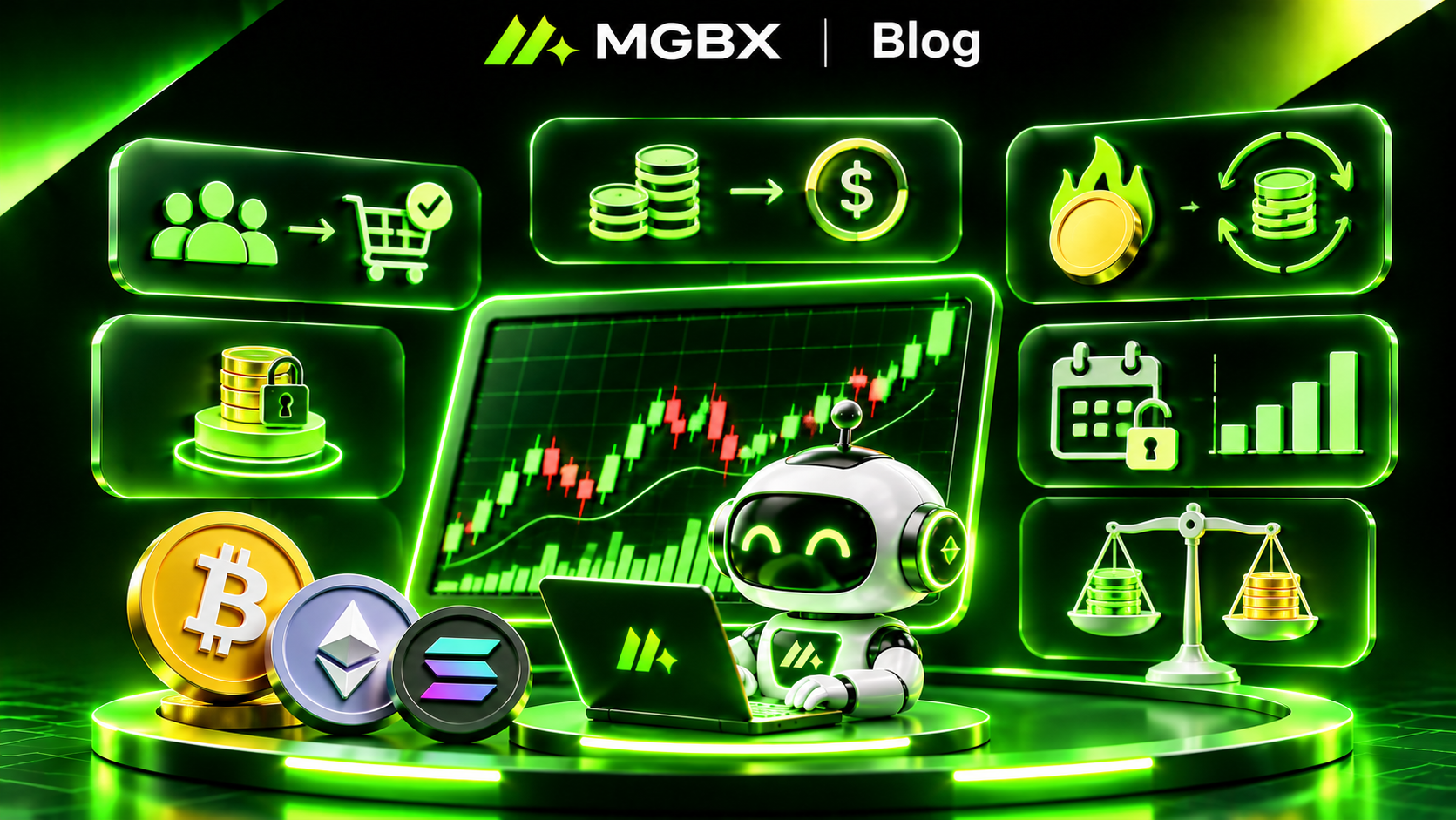
User counts, trading volume, and project revenue do not fully explain token value. Trace demand, fees, distribution, and supply to establish who needs the token, who receives revenue, and who absorbs new issuance. Business growth may not benefit holders directly because of subsidies, governance decisions, or dilution. Sustainable paid usage, clear revenue allocation, and verifiable supply changes support better valuation analysis, but none guarantees appreciation.
Key Takeaways:
Using a protocol does not necessarily require holding its token.
User fees, protocol revenue, and holder returns are different measures.
Assess burns, staking rewards, and buybacks alongside issuance.
Unlocks increase transferable supply, not necessarily immediate selling.
Ask Who Needs to Buy Before Asking How High Prices Can Go
Protocol usage, token demand, and holder rights are not automatically connected. Bitcoin has store-of-value and transfer uses; blockchain tokens often support fees and staking. Governance tokens require closer examination of their powers and economic benefits. A fee-paying role does not necessarily create substantial long-term demand.
An application processing one million daily transactions may require little token inventory if fees are tiny and providers buy centrally. Staking may reduce immediately available supply, but withdrawal rules and liquid staking tokens matter. Staked assets do not always remove transferable economic exposure.
Examine paid retention, fees per transaction, and subsidy dependence. Addresses can include bots or multiple accounts per user. If incentives exceed recurring fees, growth may still depend on token issuance. The question is whether users keep paying when subsidies decline.
Follow Revenue to Its Final Recipient
Fees may flow to validators, liquidity providers, operators, or treasuries. Suppose annual fees total 100 million, with 70 million paid to providers and 10 million in rebates. Only 20 million reaches the treasury; the full 100 million is not holder income.
Treasury assets do not automatically entitle holders to dividends. Check spending authority, buyback execution, and legal rights. Issuing 30 million worth of incentive tokens could outweigh revenue gains. Repurchased tokens may remain in a treasury rather than being burned.
Ethereum’s supply guide describes issuance and fee burning. Solana’s fee documentation distinguishes base fees, half of which are burned, from priority fees paid entirely to validators. Network activity does not mean every fee reduces supply.
How Do ETH, SOL, and Governance Tokens Capture Value?
This comparison concerns mechanisms, not expected returns. Rules can change through upgrades or governance, so check documentation dates and actual implementation.
Asset | Main Uses | Fee or Revenue Mechanism | Common Misinterpretation |
Ether ETH | Network fees and staking | Base-fee burning alongside staking issuance | Burning does not guarantee deflation |
Solana SOL | Network fees and staking | Different treatment of base and priority fees | Total fees are not entirely burned |
Uniswap governance token | Protocol governance | Official documentation describes protocol-fee-funded burns | Burning is not a cash dividend |
Uniswap’s current token documentation describes governance rights and protocol fees funding UNI burns from December 2025. Assess actual volumes, product coverage, and supply changes rather than assuming the mechanism guarantees price gains.
Burning 10 million tokens while issuing 20 million still increases supply by 10 million. Burning 20 million while issuing 10 million reduces it by 10 million. Even falling supply cannot prevent losses if demand falls faster. Staking yields also require adjusting for dilution and price changes.
Compare matching periods and distinguish token-denominated figures from dollar values. A doubling token price can raise dollar-denominated fees without increasing token usage. Lower fees may encourage activity while reducing burns per transaction.
Evaluate Unlock Pressure Alongside Valuation
A token with 100 million circulating units priced at 2 has a circulating market capitalization of 200 million. A maximum supply of one billion implies a fully diluted valuation of two billion. Neither figure represents cash raised or guarantees every token can sell at that price.
If another 30 million tokens become transferable over the next year, assess the demand available to absorb them. A 30% supply increase does not mechanically cause a 30% price decline. However, team, investor, and ecosystem allocations cannot be ignored.
The view to share is that establish how value reaches holders before debating valuation. High circulating supply, buybacks, and burns offer no universal protection. Track demand, revenue distribution, issuance, and unlocks together, and revisit the investment thesis when any of them deteriorates.