Stop-Loss and Take-Profit Orders: Key Tools for Protecting Profits
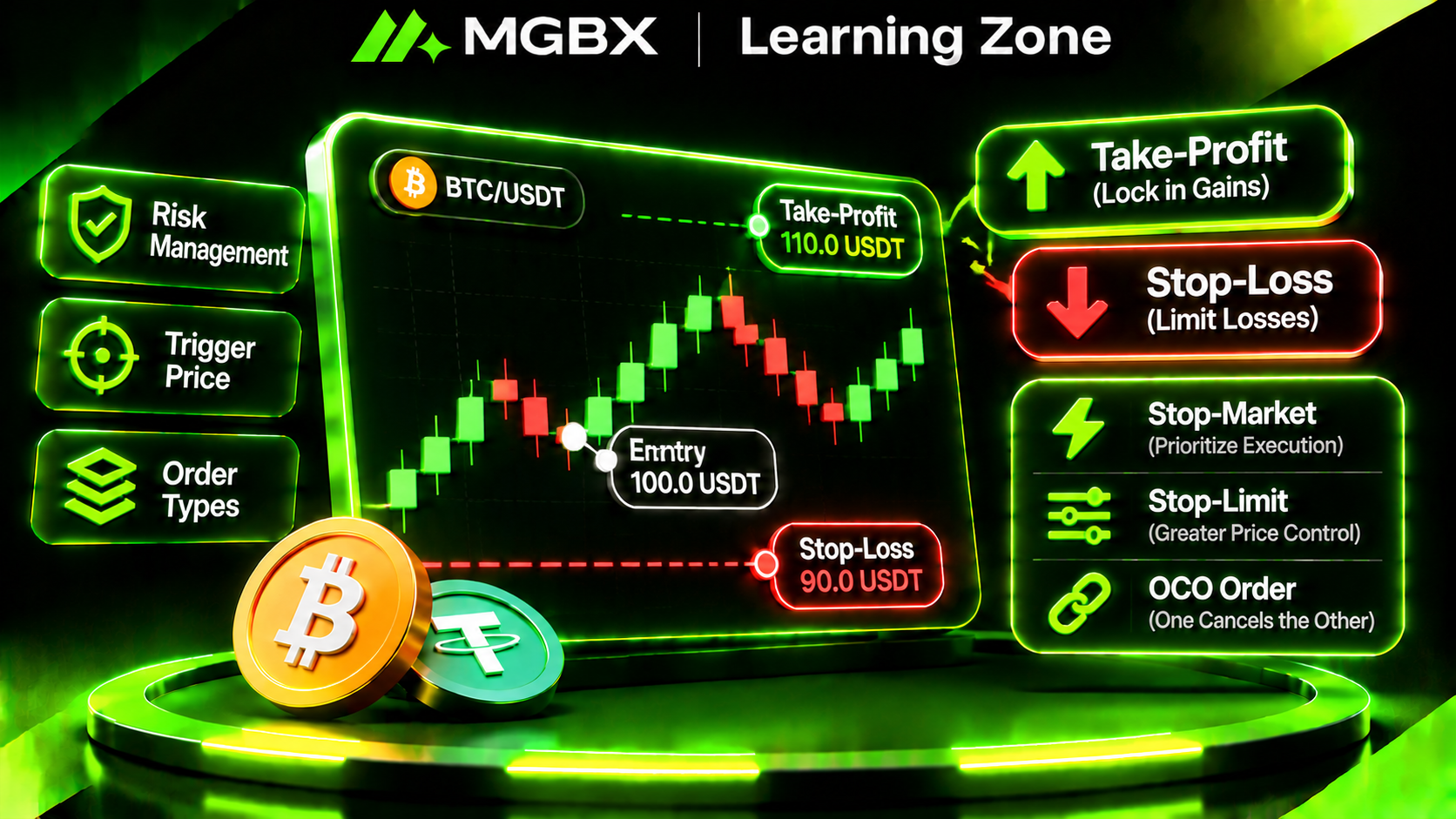
The value of stop-loss and take-profit orders lies in defining exit conditions before the market moves. Stop-loss orders are commonly used to limit further downside when prices move against a position, while take-profit orders help manage gains once the market reaches a predefined target. However, conditional orders do not eliminate market risk. Once triggered, they still need to be executed in the market, and the final result can be affected by order type, liquidity, and price volatility. Understanding the difference between a trigger price and an execution price is essential to using these tools correctly.
What Are Stop-Loss and Take-Profit Orders?
Stop-loss and take-profit orders are tools that allow traders to define trading conditions in advance.
A stop-loss order is generally used to execute an exit plan when the market moves in an unfavorable direction. For example, if a user buys an asset at 100 USDT and decides in advance to reassess or exit if the price falls to a certain level, they can set a corresponding stop-loss trigger.
A take-profit order is mainly used to manage gains when the price reaches a predefined target. For example, a sell order may be triggered automatically once the asset rises to a specified level.
Both tools address the same basic issue: traders do not have to wait until the market moves sharply before deciding how to respond. However, it is important to understand that stop-loss and take-profit prices are usually trigger prices, not guaranteed execution prices.
Trigger Price Does Not Equal Execution Price
Conditional orders generally involve at least two stages: first, the market reaches the trigger condition; then, the system creates the corresponding trading order.
If the trigger generates a market order, the system executes the trade using the prices available in the order book at that time. The main advantage is a relatively high probability of immediate execution, but fast-moving markets may result in significant slippage.
If the trigger generates a limit order, the user can define a more specific acceptable execution price. However, if the market moves quickly beyond that range, the order may remain open in the order book or fail to execute.
For example, setting a stop-loss trigger at 90 USDT does not mean the asset will definitely be sold at 90 USDT. If the price quickly drops from 91 USDT to 88 USDT, a stop-market order may be partially or fully executed at a lower price, while a stop-limit order may remain unfilled if no matching buyers are available.
Stop-Loss and Take-Profit Orders as Risk Management Tools
The purpose of risk management is not to predict every market move, but to define in advance what outcomes are acceptable.
A stop-loss order can help traders set a clear risk boundary before prices move sharply against them, reducing the need to rely entirely on emotional decisions during a sell-off.
A take-profit order can help traders plan how to realize gains instead of repeatedly changing targets as prices fluctuate.
Some platforms also offer OCO orders and similar combined order types. These allow users to set two related conditions at the same time. Once one side is executed according to the platform's rules, the other order may be canceled automatically.
Exact features and trigger logic vary by platform. These tools are designed to help execute a trading plan, not to guarantee profits.
What Else Should You Consider When Using Stop-Loss and Take-Profit Orders?
First, pay attention to market liquidity. During periods of rapid price movement or when the order book is thin, a stop-loss order may trigger normally but still execute at a price that differs significantly from the expected level.
Second, understand the difference between market and limit execution. Market execution prioritizes the likelihood of getting filled, while limit execution places greater emphasis on price control. Neither is always better in every situation.
Finally, risk management should not depend on a single stop-loss level.
Position size, asset volatility, overall capital allocation, and the maximum loss you are prepared to accept are also important parts of a complete risk management framework. For this reason, stop-loss and take-profit orders are best viewed as tools for executing a risk plan, rather than as mechanisms that can prevent losses or lock in guaranteed returns.
FAQ
What is a stop-loss order?
A stop-loss order is a tool that generates a trading instruction once the market reaches a predefined trigger condition. It is commonly used to execute a preplanned risk exit.What is a take-profit order?
A take-profit order triggers a trade once the price reaches a predefined target, helping traders manage existing gains according to a plan.Will a stop-loss order always execute at the stop price?
No. The trigger price and actual execution price are not the same. The final result also depends on the order type, market speed, and available liquidity.What is the difference between a stop-market and a stop-limit order?
A stop-market order generally prioritizes execution but may experience slippage, while a stop-limit order offers greater price control but may not be filled.Can I set both take-profit and stop-loss orders at the same time?
Some platforms support OCO or similar combined order types that allow both exit conditions to be set together. Exact availability and execution logic depend on the platform.
Mastering the basics is the first step. Follow MGBX Academy to access more cryptocurrency educational resources and market opportunities.
The process for trading on MGBX:
Register a trading account and complete the necessary identity verification;
Deposit funds and select a trade type;
On the cryptocurrency trading page, enter the amount or quantity of the cryptocurrency you wish to purchase;
Confirm the order to complete the trade, and check that your assets have increased accordingly.
Further Readings:
Complete Guide to Spot Trading
What Is Spot Trading? The Simplest Way to Buy Crypto
How Spot Trading Works: A Detailed Guide
Complete Guide to Market Orders: Speed, Benefits, and Risks
Complete Guide to Limit Orders: Trading With Precise Price Control